Where There’s a Will…There’s a Way
Maggie Horsburgh • March 1, 2022

My husband and I recently had a bit of a health scare that prompted us to look at the business side of marriage – the Will.  Any conversations regarding Wills are challenging. The “what ifs” create interesting conversation.


We all recognize that having a Will and keeping it current is very important. The initial first round of writing a Will is where the difficulty comes in. It can be painful and emotional. It forces you to really look at the relationships in your life – like the ones that currently aren’t working, yet you long for them to correct. It forces you to look at your precious items of value – are they really that valuable?

You begin to envision a small gathering of anxiety ridden prospective beneficiaries all dressed in black, wailing in emotion and distress in a dark paneled office. Dainty handkerchiefs wipe away alligator tears, with one eye on an attorney who enters the room with the golden ticket – it’s the reading of the Will. The anticipation is palpable and in that elevated room of emotion, disappointment can set in when one finds out that they are left with an old smoking pipe of your grandfathers, and the balance of the enormous estate goes to a local charity. It’s the thing movies are made of!


Alas, our lives are probably not this exciting and we are not likely going to experience this sort of drama. Yet it does bring up the subject in such a way – do you know what the end of your life will look like for the family?

Comedian Jack Benny left a touching instruction in his will when he died in 1974. Every day after his death his wife received one long-stemmed red rose at her home for the rest of her life. She died in 1983.


Anthony Scott, in his last will and testament wrote: ‘To my first wife Sue, whom I always promised to mention in my will. Hello Sue!’


Sara Clarke of Bournmouth directed in her will: To my daughter, I leave $1 – for the kindness and love she has never shown me.


In today’s modern family, things can get messy. Especially if there are heirs and dependents from more than one relationship.


Imagine this scene: Divorced after 7 years of marriage and three children, you meet another who has three children from a previous marriage, and they become like your own. You remarry and have a child together, only to find out that it was a mistake - the end of the marriage is inevitable. Separated, but not divorced, you journey further down the road in life and meet another...your soulmate. Neither of your divorces are final, so you decide to live together in happy bliss.


Then life happens and it becomes clear that you have occasion to construct your Will. Imagine muddling through all of this – his children, her children, your children, and all the spouses! First ex, second spouse, and now a common-law spouse. So many people to consider… and so many opportunities for many to dispute your Will.

You won’t be around for the drama, yet protecting the ones you love is critical! You may be shocked to find out that there are legal changes that happened recently regarding Wills and POAs that might cause you to take this subject more seriously!


Being prepared is invaluable. The best advice I ever got from a lawyer was “you are better to make a bad decision, than no decision”. I’ve taken that to heart and I update my Will every five years.

Constructing a Will starts with who makes decisions on your behalf if you should become incapacitated. It’s called the Living Will. Should it be your sister or oldest child, current partner or will the ex have full authority? Who decides how you live out your last days?


Beyond the Living Will, who is beneficiary to your life insurance policy and pension accounts from previous employers? Who gets the RRSP’s, TFSA’s and Government pensions? If the beneficiaries don’t align with what is stated in your outdated Will, a judge may determine the final outcomes. It helps to get these things sorted out now, not later.


What about real estate holdings? Who keeps the house and the cottage? Does that depend on who is on title and in what capacity? Does it go to the estate or the co-habitant? How is the mortgage addressed?

Heinrich Heine, a poet from Germany, left his widow Mathilde all of his money under one condition: she could inherit it only if remarried. Heinrich explained his strange stipulation by saying “Because then, at least one man will regret my death.”


People have the freedom to make or not make a Will. They are also free to make or not make a beneficiary designation. When they separate or divorce but fail to update all aspects of their estate plan, this can have unfortunate and unintended consequences for their estate and their beneficiaries.


It is simply not sufficient to just update your Will. Good professional estate planning advice can help address these problems and ensuing litigation can frequently be avoided. So many things to consider but doing them now is important. If you don’t want everything to go to your ex, make sure you update your Will!

The information provided on this website does not, and is not intended to, constitute legal advice; instead, all information, content, and materials available on this site are for general informational purposes only. Views expressed are my own. Please consult a lawyer for advice on legal matters.

Share this post

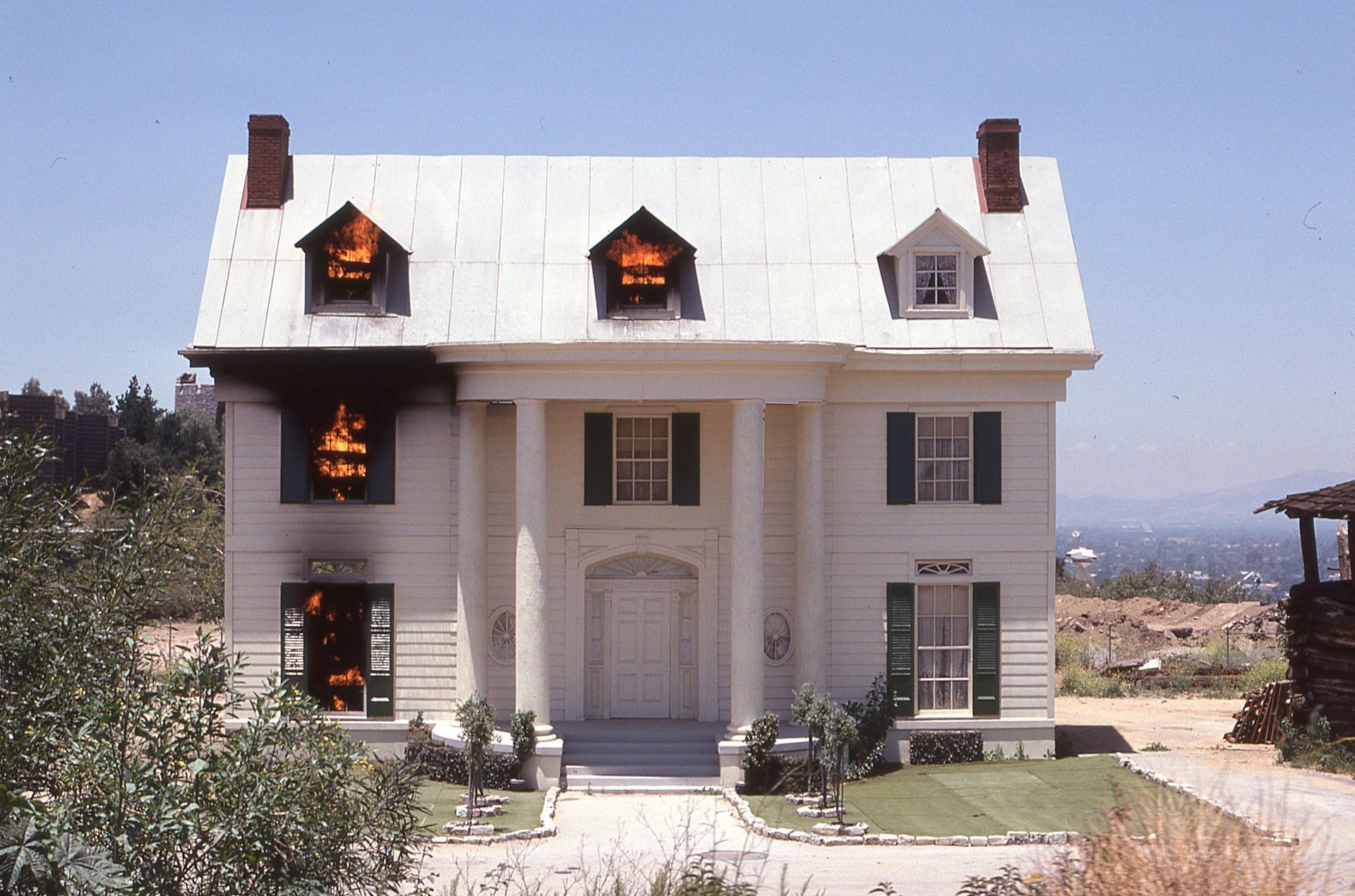
White two-story house with lit dormer windows, black shutters, and a half the room on fire.
By Maggie Horsburgh July 29, 2026
When Divorce Becomes a Battlefield
Man reading a book on a couch in a bright living room while another person uses a laptop in the background
By Maggie Horsburgh June 25, 2026
I remember sitting in my parents' living room, watching them go about an ordinary Sunday afternoon. My mother puttering in the kitchen. My father flipping through his horse magazines. They weren't unhappy. There was a certain comfort in the life they had built together, a familiar rhythm shaped by decades of shared history. They had become experts at coexistence. The sharp edges had softened with time, but so too had some of the wonder. They moved around one another with the ease of people who knew each other's habits by heart, yet I sensed a quiet distance between them. Not conflict. Not loneliness. Just an absence of curiosity, anticipation, or connection. Life seemed less like an adventure they were experiencing together and more like a routine they had mastered. And as I sat there watching them, a question settled heavily in my chest: Is this it? Is this what we're working toward? We fall in love, get married, raise our children, build careers, pay the bills, save for retirement, and then one day find ourselves sitting across from the person we've spent a lifetime with. If the children are gone, the careers are winding down, and the responsibilities have eased, what remains? Is the goal simply to endure together? Or is there meant to be something more? The question felt disloyal at the time, maybe even selfish. After all, wasn't this exactly what my parents had worked so hard to build? But once it appeared, I couldn't shake it. That question stayed with me for years. It turns out I wasn't the only one asking it. That uncomfortable question is driving a shift in family life right now. Across North America, more couples over fifty are choosing to end long-term marriages - a phenomenon researchers call grey divorce . Its rise has forced us to rethink some long-held assumptions about marriage, aging, and what we want from the second half of life. And if you're in that season of life, there's a good chance you know at least one couple it has touched. Maybe it's touched you. For many people, the children leaving home doesn't just create empty bedrooms. It creates space to finally look at life itself. Without the distractions, responsibilities, and busyness that once held everything together, some couples find themselves facing a difficult truth: they no longer recognize the life they've built or the person sitting across from them. We're Not Who We Were at 25 Here's the thing nobody says at the wedding: people change. A lot. The person you married at 27 may be almost unrecognizable at 60, and so might you. That's not a failure. That's just life doing what life does. Many grey divorces aren't dramatic. There's no affair, no blow-up moment, no single villain. It's more of a slow drift. Two people who built a life around kids, careers, and keeping the wheels turning suddenly find themselves across the breakfast table with nothing left to manage. Realizing they don't actually know each other all that well anymore. Or worse, they know each other perfectly, and that's the problem. Retirement Breaks Things Retirement was supposed to be the reward. The destination. You grind for 35 years, you get the gold watch, and then life begins. Nobody warned us that "life beginning" requires actually knowing what kind of life you want. Particularly for men, work is identity. Its structure, purpose, status, and social life all rolled into one. When it disappears, the vacuum can be enormous. Some guys handle it beautifully and discover themselves. A lot don't. And instead of confronting that loss of purpose, it gets directed at the marriage. Suddenly, couples who used to co-exist comfortably around busy schedules are home together 24 hours a day. Routines that held a marriage together evaporate. Tension shows up in places it never did before. I've seen perfectly decent couples unravel in the first year of retirement because they had no idea who they were to each other outside of the logistics of running a family. The Unfulfilled Dream Factor This part gets me every time. I've watched many people spend their best years waiting. Waiting until the kids are grown. Waiting until retirement. Waiting until then . And then "then" arrives and there isn't enough of it left. My mother may have had a list. Things she wanted to do, places she wanted to go, parts of herself she planned to explore "someday." I imagine if she had a list, she secretly kept it on a notepad in her bedside drawer. Maybe it existed only in her mind. If there were a list of things, I don’t know if she ever did them. That haunts me more than I'd like to admit, and I think it's part of why I can't judge anyone who, at 65 or 75 or even older, decides they're done waiting. I once worked with a couple in their early 80s who were separating after 60 years of marriage. Everyone around them was shocked. I wasn't. I could see that she had one chapter left, and she was not going to spend it the same way she'd spent the rest. What struck me wasn't the separation. It was the fact that she still had dreams. I was relieved that she still had dreams. The House in the Middle Okay, here's where I put on my real estate hat, because this is where things get genuinely complicated. In Ontario, the matrimonial home is treated as a joint asset, full stop. It doesn't matter whose name is on the deed, who paid the mortgage, or how long you've lived there. It's split equally. And that's just the house. Pensions, RRSPs, investments accumulated during the marriage — all of it goes into the pot. When you add legal fees into the mix, something shifts quickly. A couple who once had a comfortable retirement plan can suddenly find themselves as two individuals trying to build separate lives on what used to support one household. The financial reality of that change is often more significant than people expect. And perhaps what makes it even more complex is timing. There is no long runway to recover. Divorce in your 30s is painful, but there are decades of earning ahead. Divorce at 65 or 70 means rebuilding on whatever time is left, with far less room for adjustment. There's also the inheritance piece, and it's awkward but worth stating: when one or both spouses move on to new relationships, estate planning gets complicated fast. Kids who thought they understood what was coming can find themselves blindsided. That resentment is real, and it's worth thinking through early. These are not abstract financial structures. They are lived realities inside families. My husband likes to describe his work in his seventies as “laying fresh pavement” every day because the runway, as he puts it, technically ended, and he is simply extending it as he goes. I think about that often when I look at this stage of life and these kinds of transitions. Some people are still building. Some are beginning again. And some are doing both at the same time. That’s what makes this stage of life so complex. Not just emotionally, but structurally, practically, financially. Everything matters more because there is less time to absorb the impact. You Have More Options Than You Think When it comes to the family home, couples have real choices. Sell and split. One spouse buys the other out. There are creative arrangements that work when both parties approach the situation practically rather than emotionally… though I won't pretend that's easy when you're grieving a 40-year marriage at the same time. What matters most is getting the right people around you early. A family lawyer who understands late-life divorce. A financial planner who can show you what both paths actually look like. And a Realtor who has seen this before and won't treat your home like just another listing. Because it isn't. Grey divorce is often hard. It can be expensive and emotional, and for many people, it reshapes what they thought their future would look like. But it can also be the beginning of something you never allowed yourself to consider before. With eyes open, good advice, and honest support, some people find their way into a life they hadn’t yet imagined. What that life looks like depends on what people are willing to imagine next.